Showing posts with label Clarkia. Show all posts

Tuesday, July 13, 2010

Clarkia!

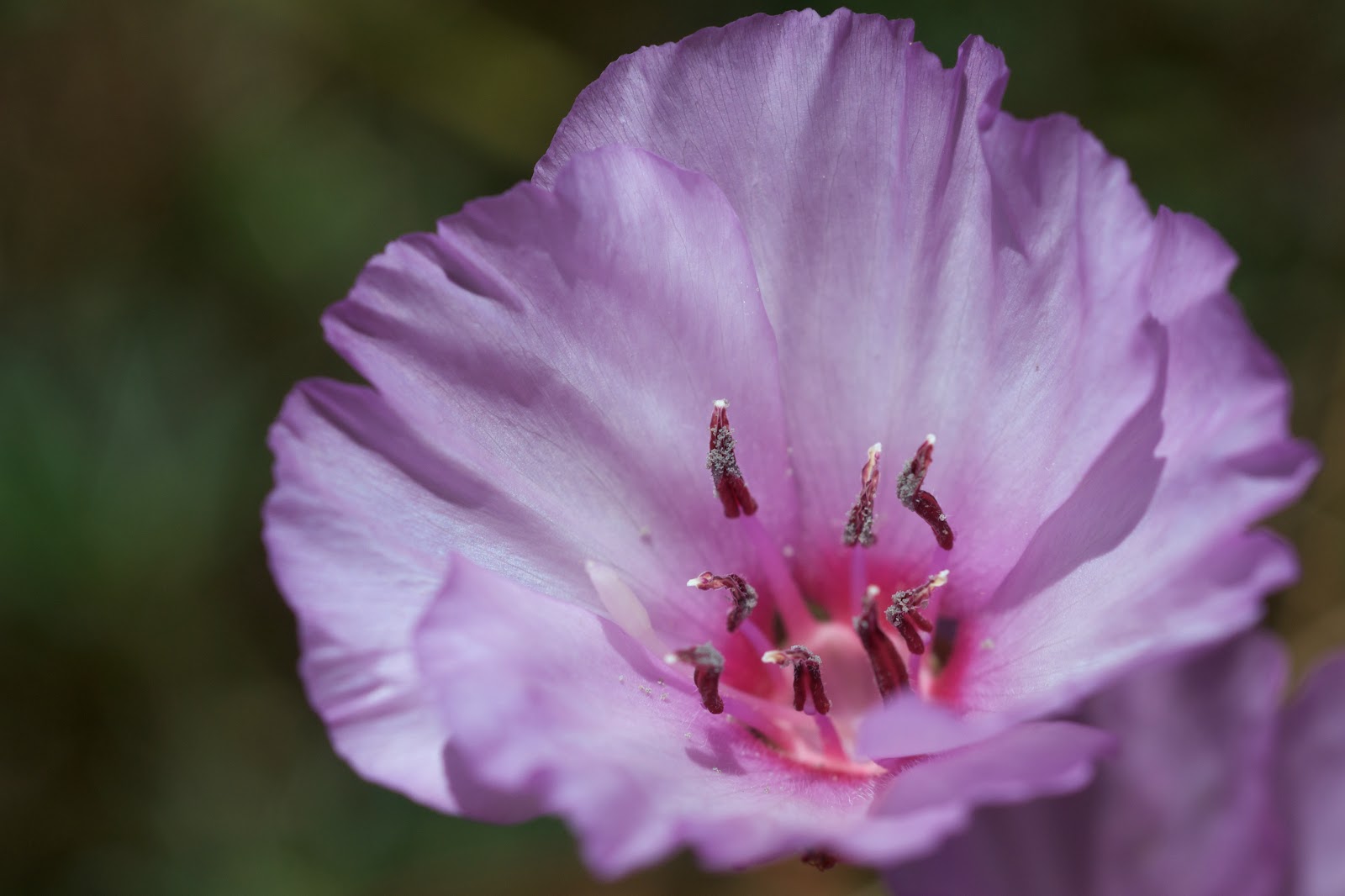
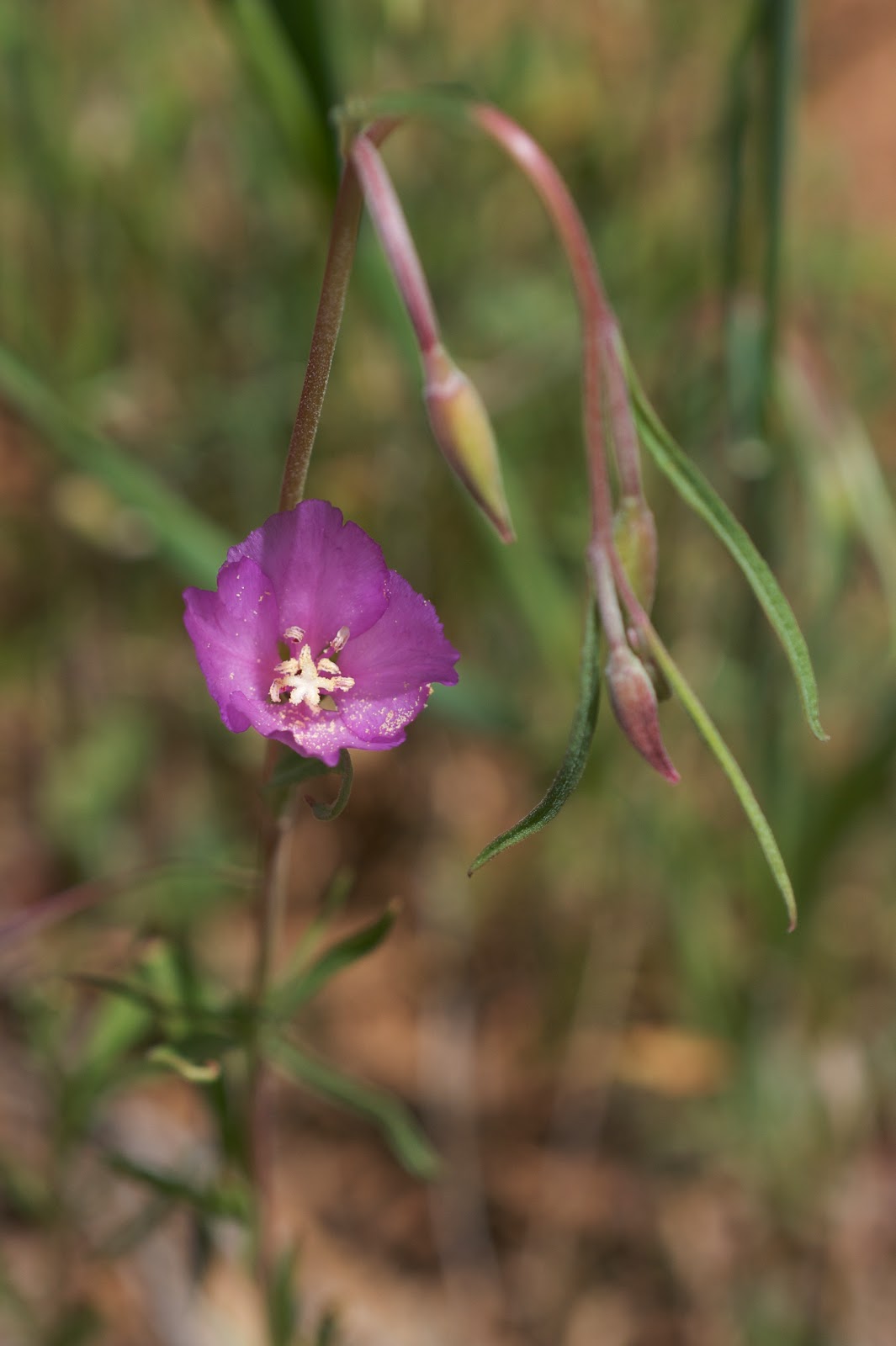
Late spring and early summer in California means Clarkia. These bright and lively members of the Onagraceae are a welcome sight as the green of spring turns into the golden summer in California. Here are some of the species I've photographed in California.

Clarkia rhomboidea
Clarkia concinna
Clarkia purpurea
Clarkia modesta
Clarkia rubicunda
Clarkia unguiculata
Clarkia purpurea ssp. quadrivulnera
Clarkia breweri
Clarkia gracilis
Clarkia epilobioides
Clarkia franciscana

Tuesday, June 29, 2010

Ring Mountain Open Space Preserve

Ring Mountain Open Space preserve is one of the best things about living in San Francisco if you're a plant nerd. A short 20-30 minute drive across the Golden Gate Bridge and into southern Marin County and you're standing on a small hill surrounded by stunningly beautiful native flowers while enjoying postcard perfect views of San Francisco and Mt. Tamalpais.

San Francisco as seen from Ring Mountain in April
Once upon a time (ohh, say, the 1950s) the urban planners in the Bay Area were busily deciding how to manage the relentless growth the post-war economy brought to the region. One of those unrealized plans had a lovely 6 lane freeway perched along the ridgetop of the Tiburon Peninsula connecting to a new bridge to San Francisco via Angel Island and Alcatraz Island. Ring Mountain, located at the start of the peninsula, was slated to be topped/leveled and a regional shopping mall placed there, with convenient access to San Francisco provided by this wonderful new bridge and freeway.

Mt. Tamalpais as seen from Ring Mountain
Thankfully we had our freeway revolt and this plan never happened. Ring Mountain remained undeveloped and in the early 1970s a spectacular flower was discovered, a species of Calochortus, that would finally seal the deal for Ring Mountain to forever remain open space.

You may be noticing a theme in my blog posts. Serpentine. Ring Mountain is full of it, and in fact, the rarity of many of the flowers found on the mountain is due to the serpentine outcrops found there. Calochortus tiburonensis, Allium lacunosum var. lacunosum,  Monardella purpurea, and more are serpentine species. This lucky happenstance of plate tectonics gives Northern California its full and fascinating flower diversity. The mountain seems to have something interesting in flower from mid-March through June and into July. Let's check out some of the more interesting species and when they bloom:

Calochortus umbellatus, mid-March
Lasthenia californica, mid-March
Dodecatheon hendersonii, mid-March
Tauschia kelloggii, mid-march
Toxicscordion species, mid-March
Leptosiphon androsaceus, mid-April
Sidalcea malviflora var. laciniata, mid-April
Layia platyglossa, mid-April
Achillea millefolium, mid-April
Ranunculus californicus, mid-April
Sisyrinchium bellum, mid-April
Calochortus umbellatus, mid-April
Thermopsis californica, mid-April
Calochortus tiburonensis, late May
Allium lacunosum var. lacunosum, late May
Eriophyllum confertiflorum var. confertiflorum, late May
Hesperolinon congestum, late May
Castilleja rubicundula ssp. lithospermoides, late May
Delphinium hesperium ssp. hesperium, late May
Silene californica, late May
Triteleia peduncularis, late May
Monardella purpurea, mid-June
Clarkia rubicunda, mid-June
Dudleya cymosa, mid-June
Eriogonum luteolum var. caninum, mid-June
Hemizonia congesta ssp. lutescens, mid-June

Monday, June 21, 2010

Pinnacles National Monument

One of the best day trips so far this wildflower season has been to Pinnacles National Monument, about 2.5 hours south of San Francisco. Pinnacles is the highly eroded partial remains of a volcano that erupted directly on the San Andreas fault over 20 million years ago. In the intervening time, the volcano was split in two by the northerly motion of the Pacific Plate sliding past the North America plate and the two halves are now approx 120 miles apart!

Pinnacles is most famous for being a reintroduction site for the California Condor and as a destination for rock climbing. Less known but just as important is the wide variety of plant species found in the Monument.

Wyethia helenioides
Nhu and I entered from the less crowded West entrance, and before we even entered the monument we were stopping to photograph Wyethia helenioides, Allium crispum, Viola pedunculata, Pholistoma auritum, and Collinsia heterophylla.

Once we stopped and paid the day fee at the Ranger's Station we headed for the main loop trail. We encountered fading Castilleja exserta ssp. exserta at the start of the trail, still looking really attractive. There were brilliant white trumpets of Calystegia subacaulis ssp. subacaulis in spots along the start of the trail. Next we started seeing Clarkia modesta and various Delphinium species, including Delphinium parryi ssp. parryi. The most exciting find early in the trail for Nhu was a waning bloom of Allium fimbriatum var. fimbriatum.  There were even more Clarkias, including Clarkia epilobioides and lots of intensely deep rich purple Clarkia purpurea ssp. quadrivulnera. Other species encountered included Chorizanthe membranacea, Toxicoscordion fremontii, Leptosiphon parviflorus, Crassula connata, and Dudleya cymosa.

Allium crispum
The flat part of the trail ended and we entered the eroded portion of the volcano. We took a small detour around the first large building-sized boulder and encountered Lewisia rediviva var. rediviva growing in cracks on the rock, a spectacular sight. Next was the sclerophyllus local cherry, Prunus ilicifolia subsp. ilicifolia growing side by side with Rhamnus ilicifolia, all with the local pipe stem Clematis lasiantha scrambling here and there. Looking down at our feet there were many lovely yellow Triteleia lugens, one of the more attractive California geophytes.

Lewisia rediviva var. rediviva
Next we entered the main part of the loop trail. This took us up several hundred feet through a series of gentle switchbacks with spectacular and dramatic scenery at every turn. Here we got some amazing habitat shots of Pinus sabiniana. Drifts of Clarkia unguiculata covered the sides of the switchbacks and near the top we started seeing early blooming individuals of Calochortus venustus. A highlight for me in this section was the twining snapdragon, Antirrhinum kelloggii. Other beautiful species encountered were Cirsium occidentale, Streptanthus glandulosus ssp. glandulosus, Emmenanthe penduliflora, Mimulus fremontii, and an invasive but lovely grass, Lamarckia aurea.

Pinus sabiniana
All in all the hike was easy, the scenery among the best I've ever seen, and the plants always interesting. I hope to make a return visit at a different time of the spring bloom in the future!

Click on any of the photos to be taken to a gallery containing all the photos I took on the hike.


More photos from the day:

Drifts of Clarkia unguiculata painted the landscape in purple

Calochortus venustus

Cirsium occidentale

Clarkia purpurea ssp. quadrivulnera


A talus cave

Wednesday, June 16, 2010

Happy Nature Photography Day!

The North American Nature Photography Association sponsors Nature Photography Day on June 15 every year.

I actually didn't know about this until June 16, and as I was traveling to Portland, Oregon, on the 15th, I wasn't out in nature on the day, so I'll cheat a little and present a sampling of images I've taken in nature on the days leading up to Nature Photography Day!

Calochortus luteus, Yellow Mariposa Lily
Skaggs Springs Road, near Healdsburg,
Sonoma County, California
Monardella villosa ssp. franciscana, Coyote Mint
Sneath Lane Trail, SFPUC Watershed,
adjacent to Sweeney Ridge,
Golden Gate National Recreation Area,
San Mateo County, California

Postelsia palmaeformis, Sea Palm
Salt Point State Park, Sonoma County, California
Oak Woodland
Forest Highway 7, Mendocino County, Mendocino National Forest, California
Fritillaria recurva, Scarlet Fritillary
Forest Highway 7, Mendocino County,
Mendocino National Forest, California
Clarkia rubicunda, Farewell to Spring
Edgewood County Park, San Mateo County, California