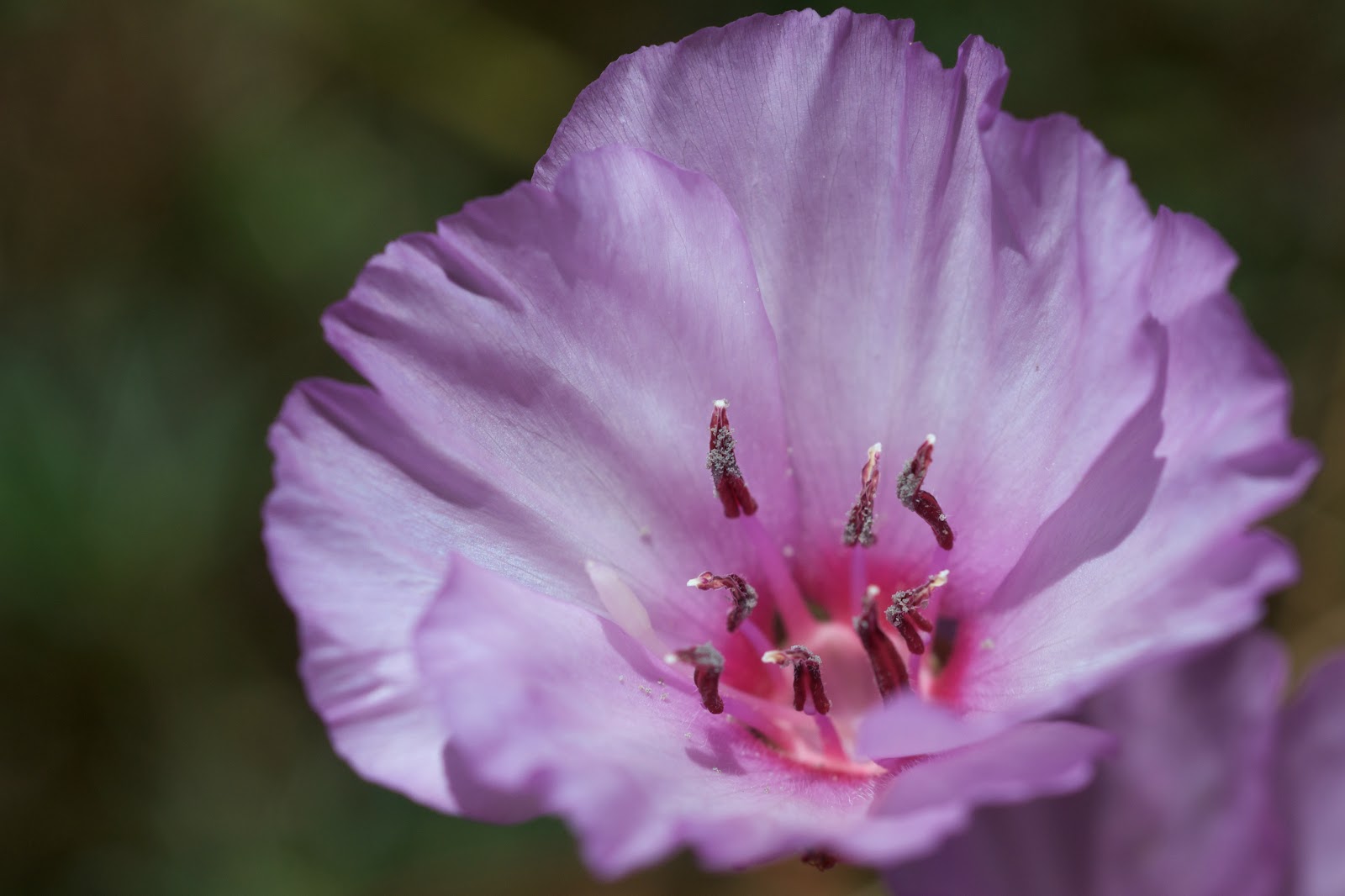
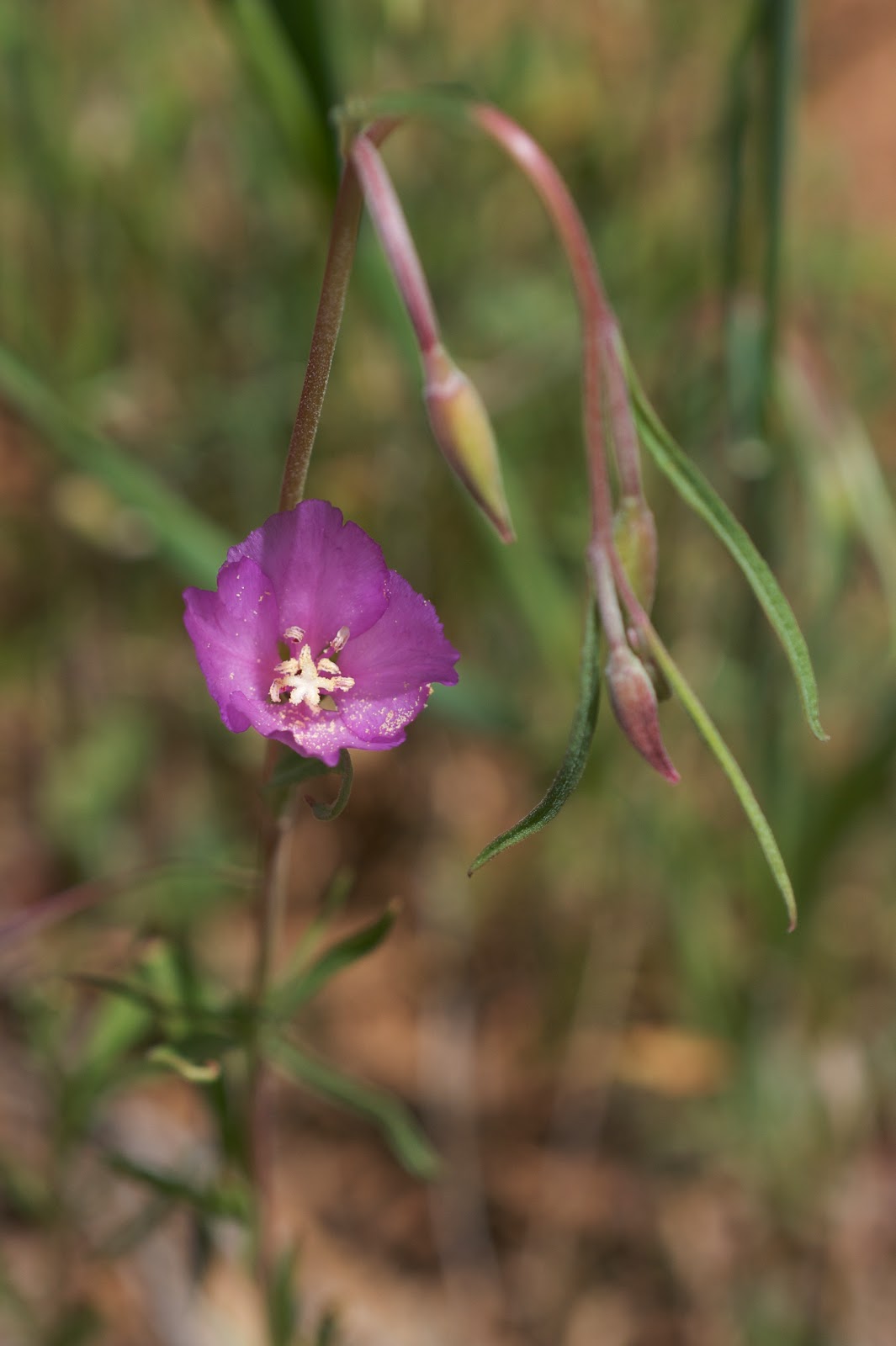
Showing posts with label Pink. Show all posts

Saturday, August 21, 2010

Castilleja and Triphysaria

A continual favorite photographic subject of mine are the Indian Paintbrushes and their allies. The names and families have been in a bit of flux over the last decade or so but now they are mostly known as Castilleja and Triphysaria in the Orobanchaceae.

The genus Castilleja has about 200 species with a center of distribution of western North America. We definitely have a lot here in the Bay Area. Almost every time I head out on a trail or down a back road there are anywhere from 1 to 4 species in bloom.

Here are some of my favorites:

Castilleja exserta, Panoche Road,
San Benito County, California
Castilleja kraliana, Bibb Glades,
Bibb County, Alabama
Triphysaria eriantha ssp. rosea,
Salt Point State Park, Sonoma County

Triphysaria eriantha ssp. rosea,
Salt Point State Park, Sonoma County
Castilleja tenuis, near Leland Meadow, 
off CA 108, Tuolomne County, California
Castilleja coccinea, near Eureka Springs, Arkansas

Castilleja foliolosa, off Brim Road, Colusa County

Castilleja affinis, Bean Hollow
State Beach, San Mateo County
Castilleja ambigua, Bean Hollow State Beach
San Mateo County
Castilleja attenuata, Bear Valley Road,
Colusa County


Sunday, August 15, 2010

San Benito County Geophytes

Allium crispum
In mid-May I set off for a day of wildflowering south of San Francisco. My destination was Panoche Road, a few miles to the northeast of Pinnacles National Monument, in San Benito County. It was prime geophyte season and I was looking forward to seeing what species were in bloom.

Panoche Road is about 2.5 hours south of San Francisco, reached via Hollister, a sleepy agricultural town south of San Jose. The day started off with threatening clouds and scattered light rain. Funny thing that rain. We had rain almost every weekend in May, which is a little unusual compared to the recent 3-4 years. The road runs through large ranches with the greatest diversity of flowers found all along the roadsides in the hilly sections.

Bloomeria crocea
My first stop yielded Allium crispum, Delphinium spp., Collinsia heterophylla by the thousands, Lupinus microcarpus var. densiflorus in heavy patches right up against the road, Castilleja subinclausa, the stupendous Clarkia breweri, Triteleia laxa, Dichelostemma capitatum, and Lomatium spp.

The local land use was mainly ranching but the road was nestled in hills so the flora diversity remained high. I honestly didn't see many cattle. There were stupendous displays of Calochortus luteus and C. venustus going up rocky Quercus-studded hillsides, out of reach behind a fence and No Trespassing sign.

Clarkia breweri
As I continued south on Panoche Rd I continued seeing Calochortus luteus, heavy in some places, along with large populations of Eriogonum fasciculatum. There was a small area where scattered plants of Castilleja exserta grew, exhibiting a robustness and size of growth I'd never seen before in this species. Brodiaea were out and I even encountered the uncommon Bloomeria crocea, growing at the base of a single-lane roadcut. Around this point Clarkia unguiculata really started making a robust showing right alongside the road. For many miles there were scattered colonies of Calochortus venustus, some with many flowering individuals close togther. Other species encountered were Cirsium occidentale, Penstemon heterophyllus, Ephedra sp., Castilleja spp., Lupinus spp., Delphinium spp.

The rain ended my day a few hours earlier than I'd wanted. The drive back always seems to take less time than the drive down and before I realized it, 2.5 hours was past and I was back navigating city streets in San Francisco.


Brodiaea
Calochortus luteus
Collinsia heterophylla
Calochortus venustus
Lupinus microcarpus var. densiflorus
Clarkia unguiculata
Penstemon heterophyllus
Delphinium parryi ssp. parryi

Tuesday, July 13, 2010

Clarkia!

Late spring and early summer in California means Clarkia. These bright and lively members of the Onagraceae are a welcome sight as the green of spring turns into the golden summer in California. Here are some of the species I've photographed in California.

Clarkia rhomboidea
Clarkia concinna
Clarkia purpurea
Clarkia modesta
Clarkia rubicunda
Clarkia unguiculata
Clarkia purpurea ssp. quadrivulnera
Clarkia breweri
Clarkia gracilis
Clarkia epilobioides
Clarkia franciscana

Tuesday, June 29, 2010

Ring Mountain Open Space Preserve

Ring Mountain Open Space preserve is one of the best things about living in San Francisco if you're a plant nerd. A short 20-30 minute drive across the Golden Gate Bridge and into southern Marin County and you're standing on a small hill surrounded by stunningly beautiful native flowers while enjoying postcard perfect views of San Francisco and Mt. Tamalpais.

San Francisco as seen from Ring Mountain in April
Once upon a time (ohh, say, the 1950s) the urban planners in the Bay Area were busily deciding how to manage the relentless growth the post-war economy brought to the region. One of those unrealized plans had a lovely 6 lane freeway perched along the ridgetop of the Tiburon Peninsula connecting to a new bridge to San Francisco via Angel Island and Alcatraz Island. Ring Mountain, located at the start of the peninsula, was slated to be topped/leveled and a regional shopping mall placed there, with convenient access to San Francisco provided by this wonderful new bridge and freeway.

Mt. Tamalpais as seen from Ring Mountain
Thankfully we had our freeway revolt and this plan never happened. Ring Mountain remained undeveloped and in the early 1970s a spectacular flower was discovered, a species of Calochortus, that would finally seal the deal for Ring Mountain to forever remain open space.

You may be noticing a theme in my blog posts. Serpentine. Ring Mountain is full of it, and in fact, the rarity of many of the flowers found on the mountain is due to the serpentine outcrops found there. Calochortus tiburonensis, Allium lacunosum var. lacunosum,  Monardella purpurea, and more are serpentine species. This lucky happenstance of plate tectonics gives Northern California its full and fascinating flower diversity. The mountain seems to have something interesting in flower from mid-March through June and into July. Let's check out some of the more interesting species and when they bloom:

Calochortus umbellatus, mid-March
Lasthenia californica, mid-March
Dodecatheon hendersonii, mid-March
Tauschia kelloggii, mid-march
Toxicscordion species, mid-March
Leptosiphon androsaceus, mid-April
Sidalcea malviflora var. laciniata, mid-April
Layia platyglossa, mid-April
Achillea millefolium, mid-April
Ranunculus californicus, mid-April
Sisyrinchium bellum, mid-April
Calochortus umbellatus, mid-April
Thermopsis californica, mid-April
Calochortus tiburonensis, late May
Allium lacunosum var. lacunosum, late May
Eriophyllum confertiflorum var. confertiflorum, late May
Hesperolinon congestum, late May
Castilleja rubicundula ssp. lithospermoides, late May
Delphinium hesperium ssp. hesperium, late May
Silene californica, late May
Triteleia peduncularis, late May
Monardella purpurea, mid-June
Clarkia rubicunda, mid-June
Dudleya cymosa, mid-June
Eriogonum luteolum var. caninum, mid-June
Hemizonia congesta ssp. lutescens, mid-June